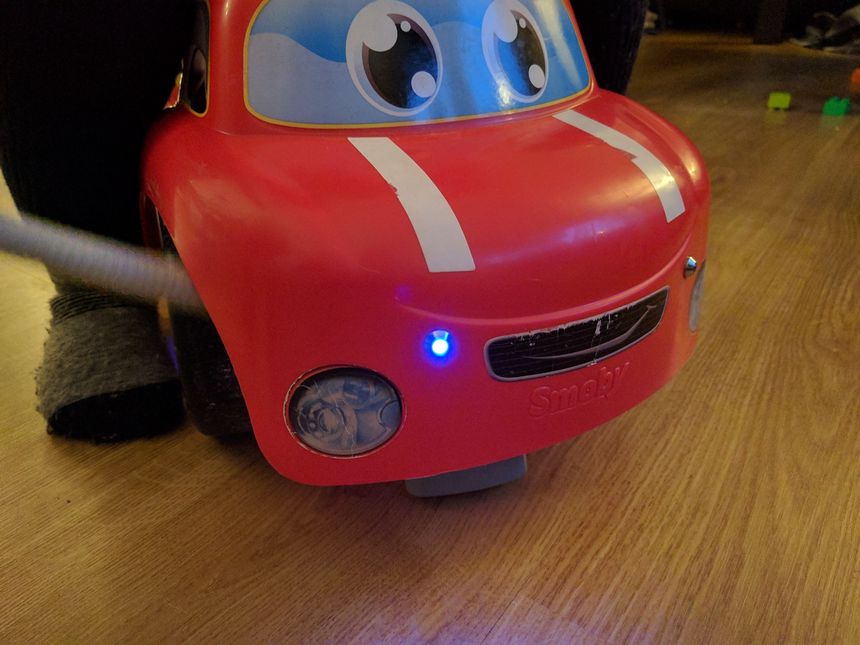
My two twin boys are pretty into Fireman Sam these days, so the red walking car they got when they were babies got an upgrade. Four blue self-flashing LEDs, a toggle switch and a 2xAA battery holder; everything bought cheap on eBay. And voila! A fire truck with blue emergency lights.
Putting LED lights in a IKEA play kitchen
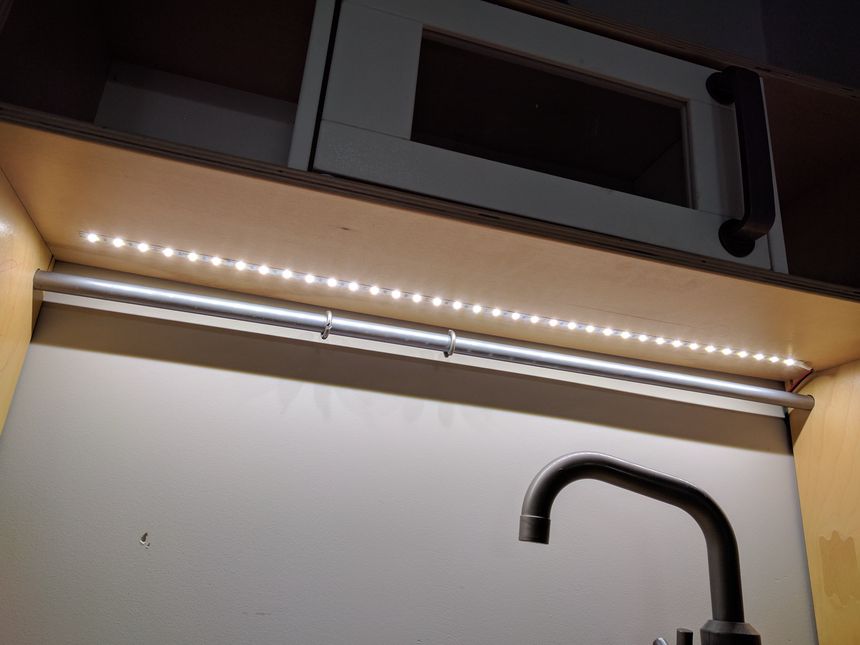
My nephew, and my twin boys, both have a Ikea play kitchen. It’s a pretty cool toy, with a microwave, oven, sink, cabinets and hot plates. The plates have LEDs so they turn red when turned on, just to make it a bit more real. But the play kitchen is even greater with some lights!
Replacing front LEDs on RC car
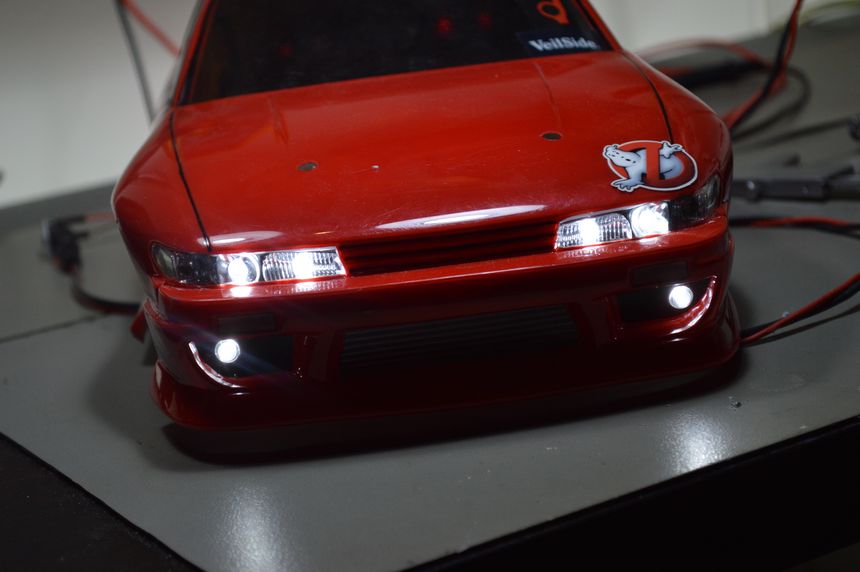
My brother-in-law is into RC car drifting, and a big part of that is of course to have a cool-looking car! He used a LED light kit, but the front lights were not that great. Very blueish and the intensity of the LEDs varied quite a bit.
So I replaced the LEDs and installed some fog lights, it ended up quite decent looking I think 🙂
Adding shelves, lights and a soldering station to my electronics workbench
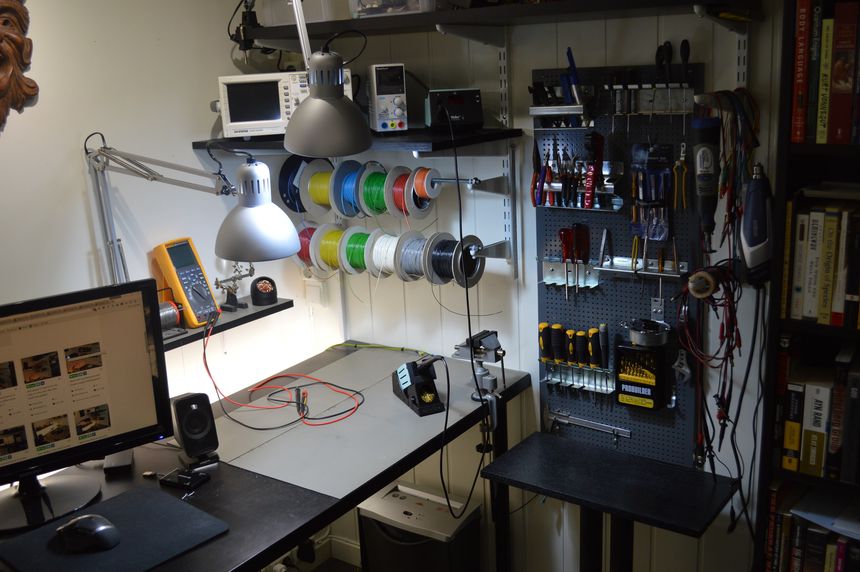
As I wrote in a previous post about my home office; our house isn’t huge, so I had to make the most of the office/man cave that I got. The electronics corner is pretty small, and a couple of things about it was annoying — like not having my instruments, e.g., oscilloscope and power supply, readily available. So I decided I needed to fix that!
Making a Lync status light
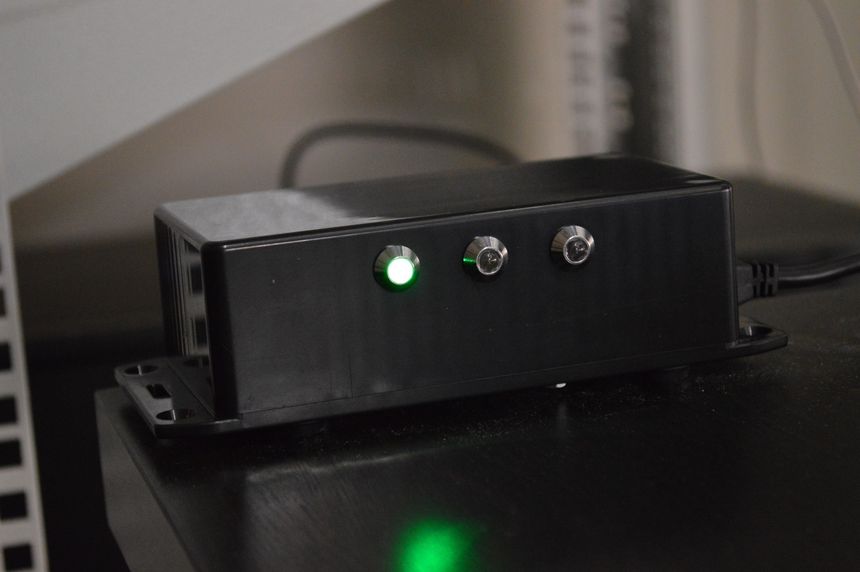
When I am at work, I use headphones; a lot. About half the time I am listening to music, the other half I am talking with someone on Lync (Skype for Business). That made it difficult for my colleagues to know whether I am available or not, so I get interrupted when I’m on the phone. I needed a way to communicate my availability!
The first look at my home office/man cave
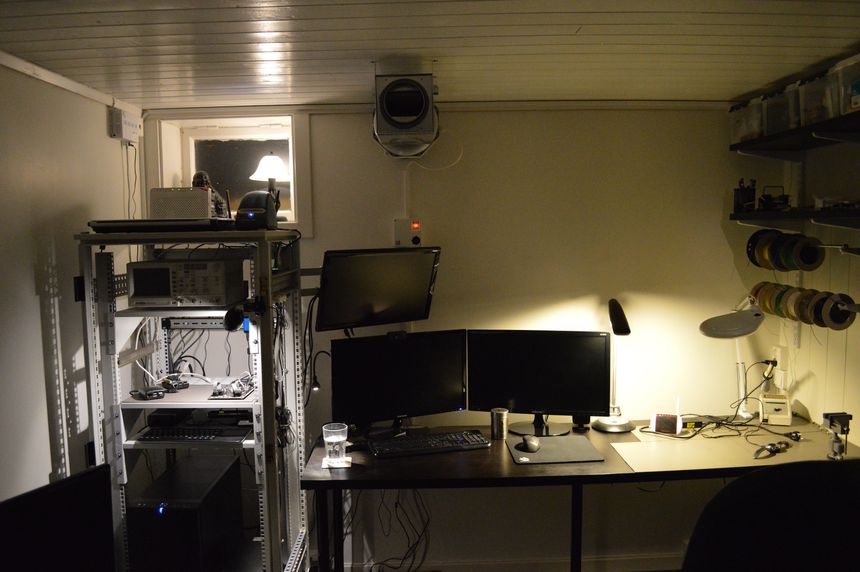
About a year ago the girlfriend and I finally found a house and got settled in. It’s not huge; neither is the garden or the garage. But there was enough space for me to get my own room; a man cave, office, and workshop, all in one! I’m very happy with it, small spaces spike the creativity, and I’ve managed to fit pretty much everything I needed. It has taken me this long to get everything together and document it.
Getting started with the AVR microcontroller series
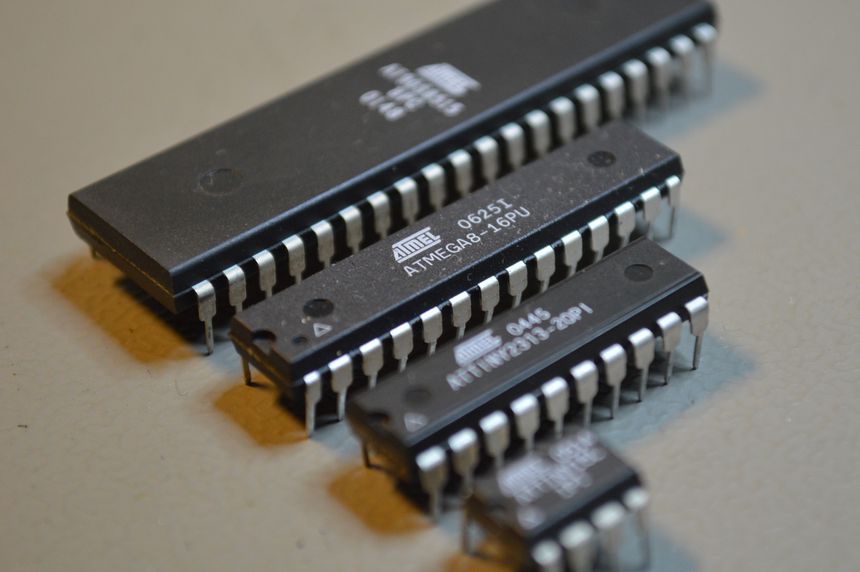
AVR is a series of microcontrollers from Atmel. Fitted with A/D converters, comparators, timers, interrupts, internal oscillator, and more. Flash memory is used for the main program, SDRAM for variables and EEPROM for values that need to be saved through a power loss. Cheap, fast and easy make them perfect for home automation projects.
Seasoning a humidor

Seasoning a humidor means getting it ready for cigars by saturating the wood with moisture, so that it no longer is hygroscopic.
Temperature and auxiliary sensor (RS-485), AVR
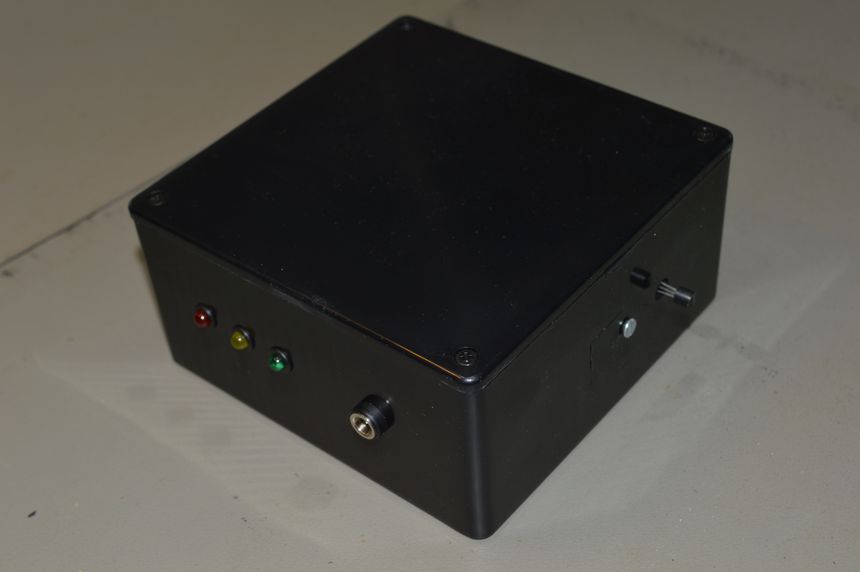
Temperature sensor with serial RS-485 interface. Two additional sensors can be connected using 3-pin headers on the circuit board. Uses an AVR ATmega8 microcontroller.
Temperature and humidity sensor (RS-232), AVR
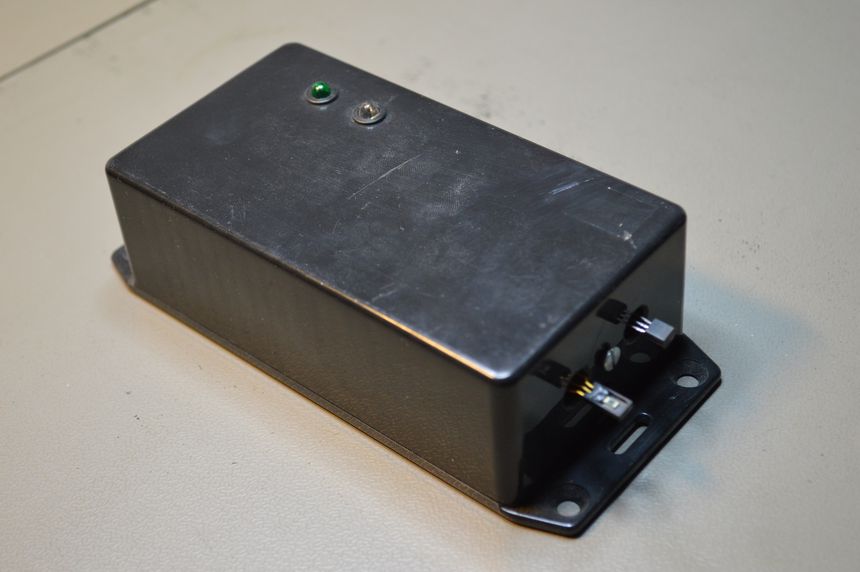
I rebuilt an existing interface module — to be a stand-alone temperature and humidity sensor, with serial RS-232 interface. Uses an AVR ATmega8 microcontroller.