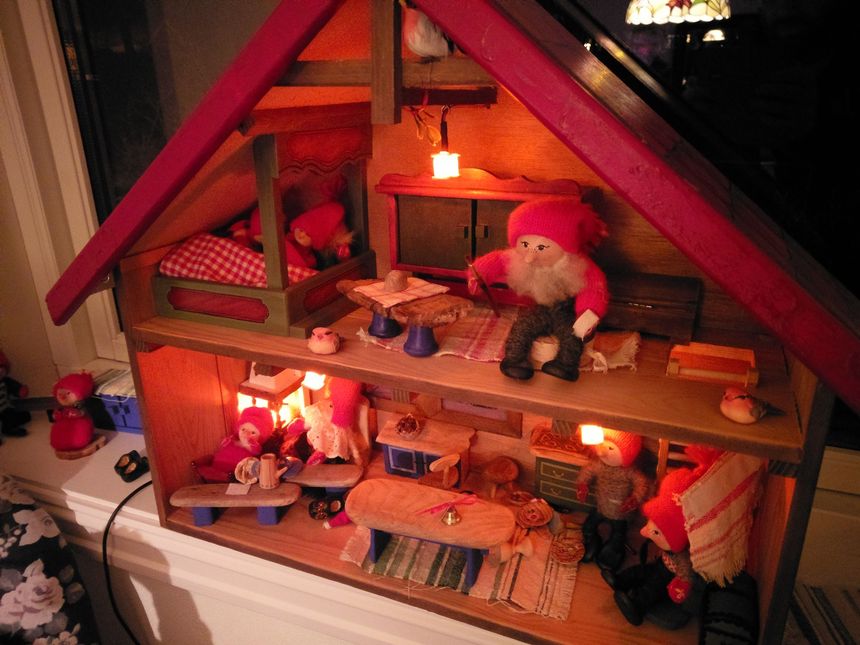
My mom has a miniature elf house that she takes out every Christmas, and it has become a tradition that all her grandkids partake in the elves moving in. She has tried to mount lights in it before, using a battery powered LED strip, but the lights turned out too bright, and the light was pretty cold. So I ordered some orange flickering candle-like LEDs from eBay and got to work 🙂
I got a bench power supply and another shelf for my electronics workbench
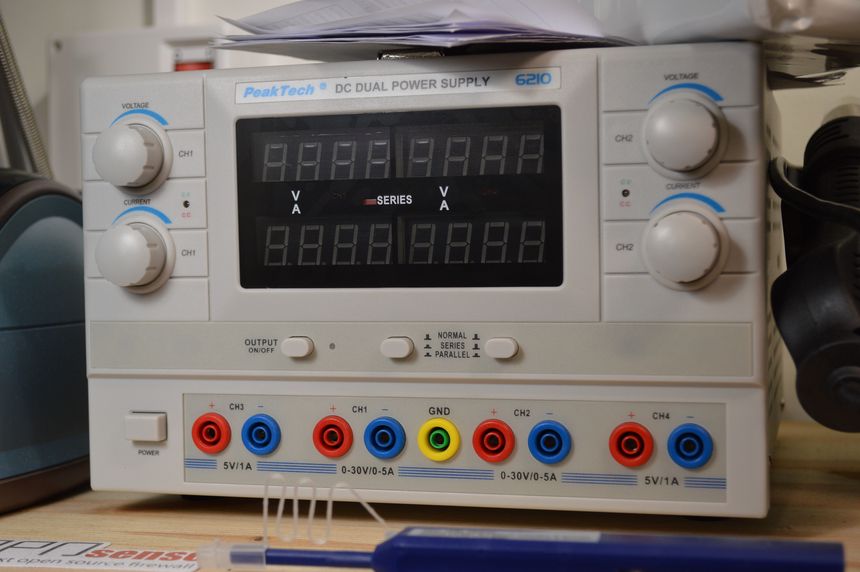
I really love the shelf rail system I have on the wall by the electronics lab; it distributes the load evenly over a large surface, and it’s incredibly easy to move things around and try out different solutions. By squeezing some of the existing shelves a bit closer and moving the wire rolls; I was able to fit yet another shelf 🙂
Making a WiFi MQTT controlled relay for Home Assistant
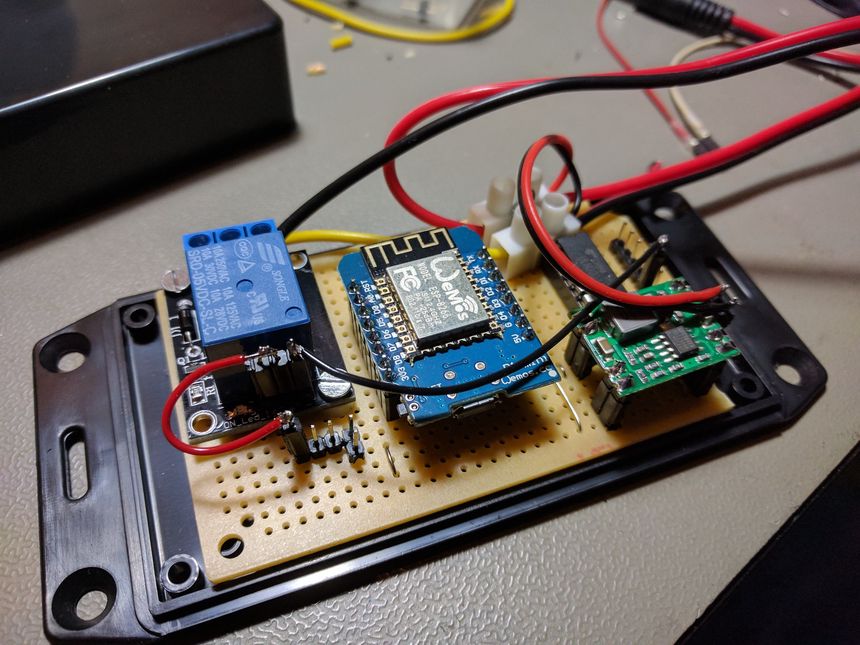
I’ve wanted to use an ESP8266 WiFi module in a project for some time now, and after reading about the WeMos board, I figured this was the easiest way to get started. The WeMos D1 mini is quite small and much easier to interact with and program than the ESP8266 devices. So I built this single relay controller, with internal temperature reporting. I am communicating with it using MQTT, which makes it really easy to implement it into things like Home Assistant.
Getting the Raspberry Pi ready for IoT
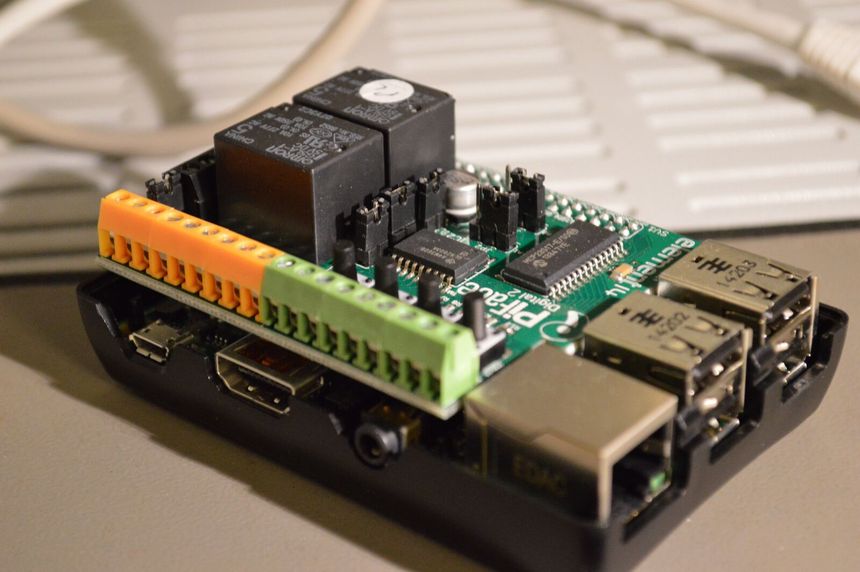
There are a few things we need to do with the Raspberry Pi single-board computer before using it in IoT projects. Here is a short guide of what I typically do, mostly as a reminder to myself — but it might be of use to others as well 🙂 This article assumes that the Raspberry Pi will be headless, so no GUI.
Making the Lync status light bigger and brighter
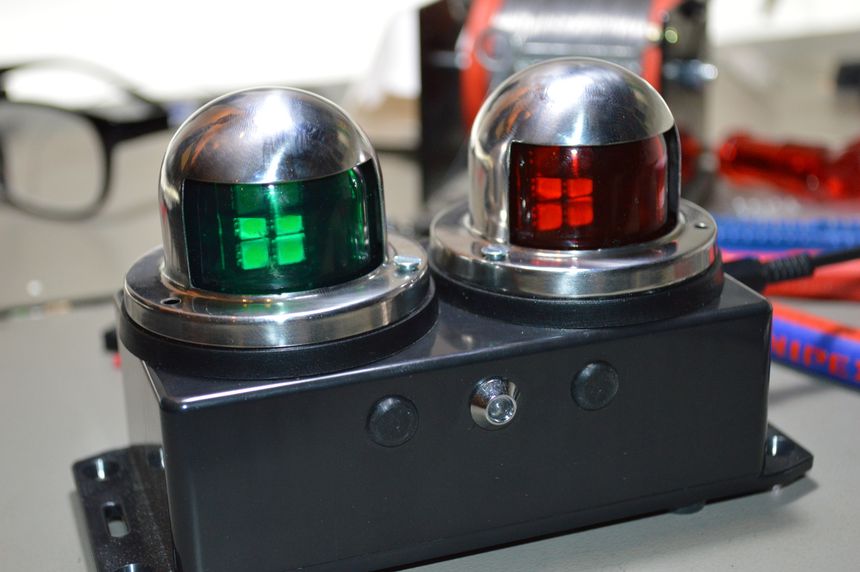
This project is an improvement to my previous Lync status light, built back in May 2016. It worked fine, but it only had three 5 mm LEDs. People who knew about the module noticed, but many people didn’t, so it did not have the effect I was looking for. That’s why I decided to upgrade it, and this time use bigger and brighter lights!
Network infrastructure upgrade, UniFi FTW!
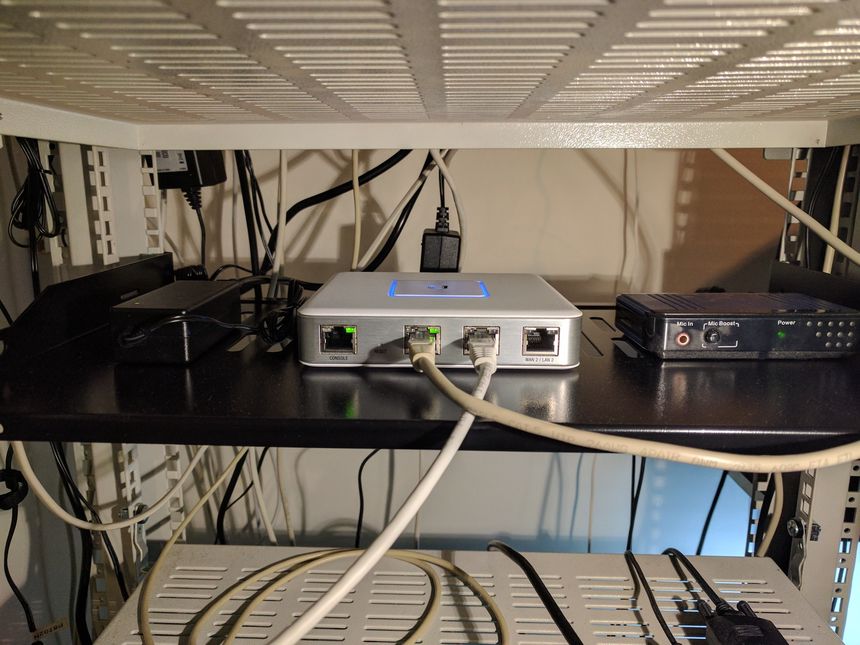
When watching a few Linus Tech Tips videos on YouTube, I noted that he mostly used UniFi wireless access points. So I started reading about this series of products, and it didn’t take long fore I realized that I had to have it. I was already looking to replace my current router, as I wanted the WiFi access point to be placed more central in the house. And that didn’t work with a combined router and WiFi device. In the end, I replaced all my network infrastructure 😛
Stacked Raspberry Pi boards, with common power supply
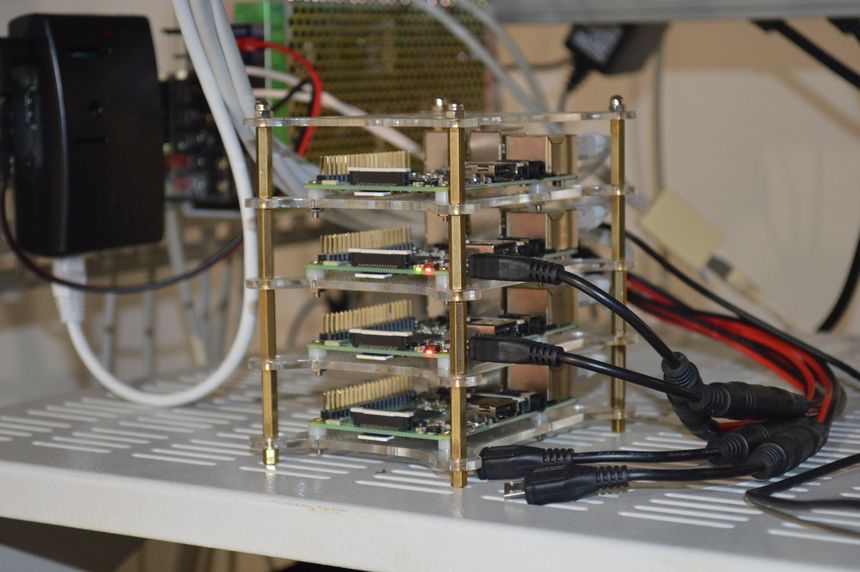
I mounted four Raspberry Pi 3’s in an acrylic stack frame, and used a 5V 20A DIN rail mounted power supply to drive them all.
Modifying a noisy SOS station kids toy
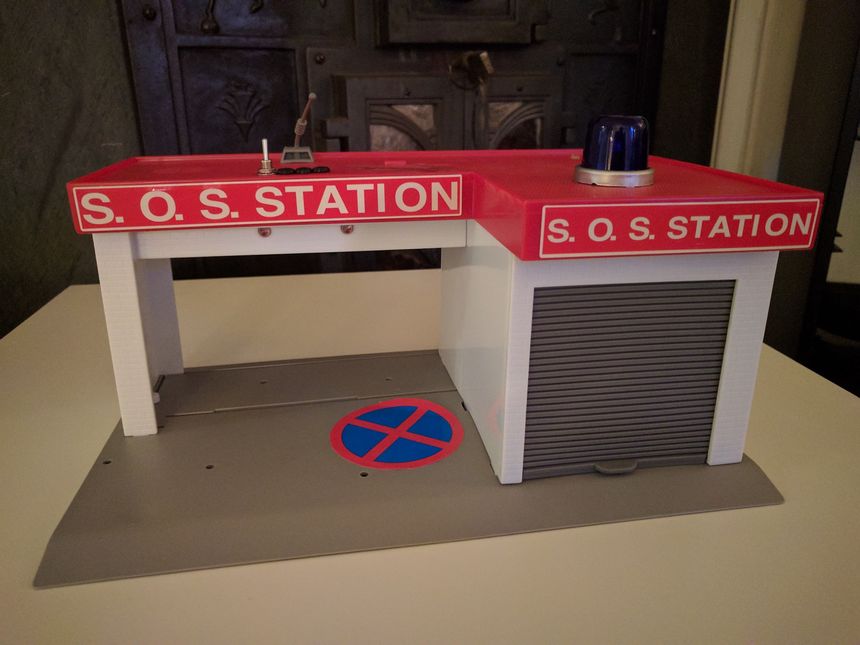
A while back my kids got this SOS station toy, it came with a few emergency cars and the boys quite liked it. My girl friend and myself however; hated it, it had a speaker and made a high siren sound and an annoying voice would shout things like “all cars respond”. So I modified it; ripped out the speaker and mounted a few LEDs instead, so now it flashes but no sound.
New ultrawide monitor and computer setup changes
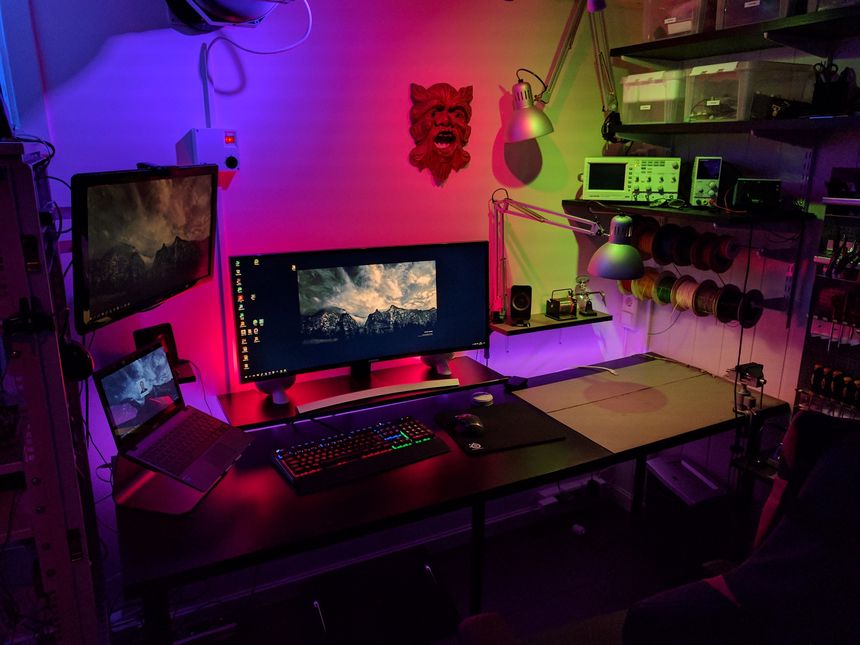
I’ve gotten myself one of those ultrawide curved monitors. I’ve wanted one for a long time, and I finally bought one; a Samsung 34". Since my desk is pretty shallow, and not that big really, I also wanted to free up some work surface by getting things on shelves. So I’ve been doing a bit of work on my computer setup.
Sticking a LED-strip behind my TV
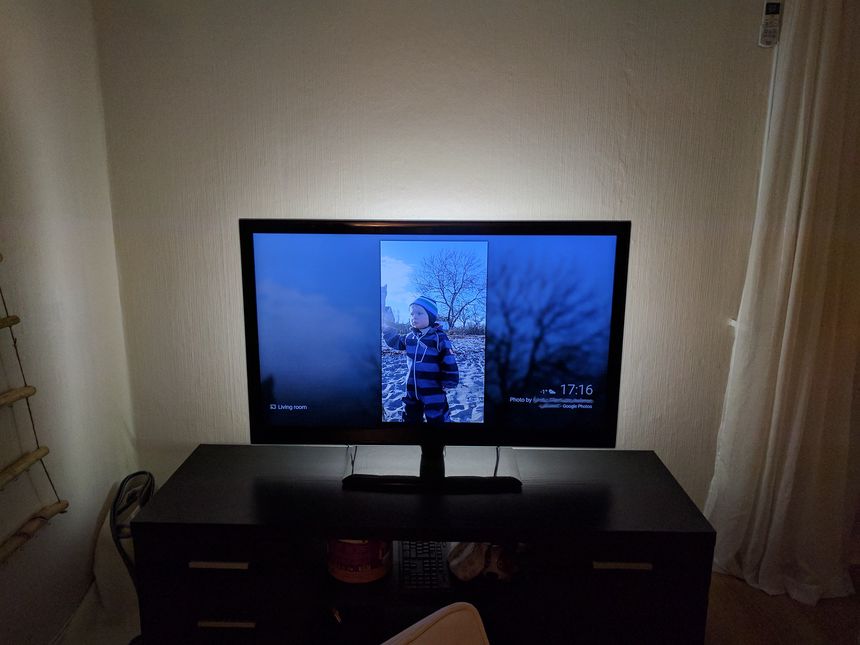
Bias lighting is, simply put, to light up the wall behind a monitor or TV. It creates a glow around the screen and, supposedly, creates a more comfortable and high contrast viewing experience. I made my bias lighting by merely sticking a LED-strip behind the TV.