
I recently started upgrading my servers and containers to Ubuntu 20.04. I made three Ansible playbooks to get information about which hosts I needed to update.
SIOS — the serial protocol syntax I made

When I first started making AVR modules, there was no Raspberry Pi or ESP8266. Arduino was introduced in 2005, the same year I started with the AVR microcontroller. But I didn’t know of it until many years later.
There weren’t any Wi-Fi enabled microcontrollers at that time. Both Ethernet and Bluetooth interfaces were more expensive, and harder to interface. So I ended up using the good old serial port.
I made my first module with a serial interface in 2007. RS-232 was cheap, and easy to implement.
With RS-232 I got a way of getting data between the microcontrollers and the computer, but I still needed a defined syntax. So I set out to make one, and called it SIOS — Serial Input/Output System.
After trying a lot of task managers, I came back to Todoist

I’ve tried a lot of task managers. Todoist was the first task manager I used, back in 2015. I was very happy with it, got premium, but stopped using it about 1½ years later — so what happened?
The answer is rather simple; I got overwhelmed. Not by Todoist, but by the tasks. It may seem counter-intuitive to stop using a task manager when the tasks become overwhelming — and it is. Instead of tackling the growing number of tasks, I convinced myself that the problem was the tool; Todoist.
New tiny pipe — and more pipe tobacco

I recently got into pipe smoking, and I have enjoyed it a lot. There is a certain amount of peace and mindfulness about it that I really enjoy.
So I felt it was time to get another pipe — and some more pipe tobacco 😃
Taking breaks — even when working from home

I have a hard time remembering to take breaks when working from home. I do check Twitter and Reddit every now and then, and think of that as a break — but it’s really not.
A break is stretching, getting up, walking around, or going outside. And I’m not very good at doing any of those things.
Garage door opener, flashing LED light

While looking in the manual for our garage door opener; trying to figure out how to adjust it. I noticed it had a couple of interesting I/O terminals. 24VDC LED strobe — I love LED strobes!
New Hue downlights in the basement
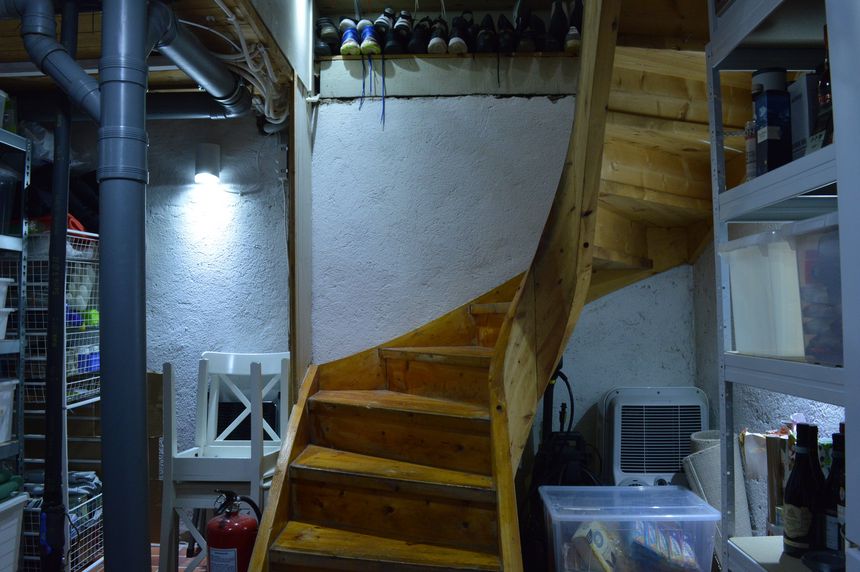
Our house has a small, two-room basement. Both rooms are 10 m² and the innermost room is my home office. I recently installed three more Philips Hue lights in the stairway and first basement room; downlights with GU10 sockets.
Some thoughs on storing cigars
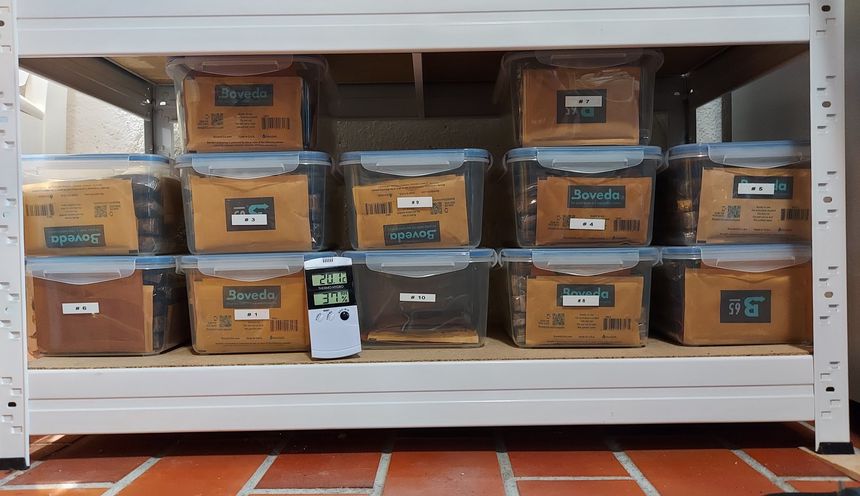
I first got into cigars 9 years ago — in 2012. Since then I’ve tried different ways of storing the cigars, here is what I’ve learned so far.
Kids traffic light, with Raspberry Pi Zero W

As the weather is warming up here in Norway — my kids have gotten their bikes out. To make it more fun, both for them and me, I figured I’d build a series of traffic signals that they could play with.
I first started with a traffic light, simple — red, yellow and green. To control it I am using a Raspberry Pi Zero W, this will allow me to make it communicate on Wi-Fi and MQTT later.
Hide your homelab IP with a VPS, WireGuard and iptables

One (potential) downside to running public services on your homelab, is that you expose your IP address. That may, or may not, be a problem — but here are ways around it. The simplest way is to put Cloudflare in front, but this will only handle web traffic, and is a bit of a black box.
Another, more hands-on, approach is to use a VPS (or LXC container); WireGuard and iptables. We will create a secure tunnel between the VPS/container and the homelab HAProxy instance, and forward traffic using iptables.